Struggling to get Interview Feedback?
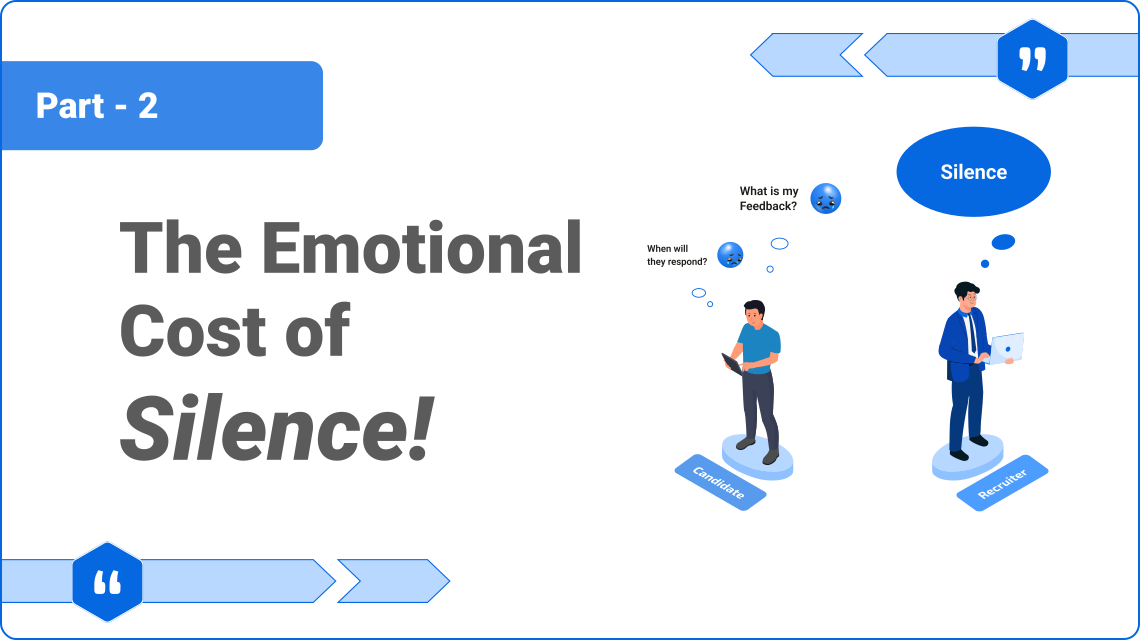
Why Interview Feedback Is a Must: The Emotional Cost of Silence
Ever crafted a job search masterpiece—your resume a veritable work of art, your interview performance practically Oscar-worthy—only to be met with a soul-crushing lack of feedback after an interview?
The Job Search Frustration hits you like a plot twist straight out of a tragicomedy, leaving you wondering if you're the protagonist or just an extra in a particularly bleak indie film. And the Anxiety after a job interview? It’s akin to being left dangling from a cliffhanger, desperately waiting for a season two that may never arrive, knowing full well the showrunners have probably moved on to their next big project.
In our introduction, we bravely ventured into the shadowy depths of the Hiring Black Hole and introduced Connect EC, the gamified ethical hiring platform valiantly fighting for the simple human right of Interview Feedback. Then, in Part 1, moral giants like Gandhi and Mandela eloquently argued that silence in hiring is nothing short of a betrayal of basic human dignity.
Now, in Part 2 of our quest, we delve into the raw, unfiltered emotional wreckage left in the wake of no response after an interview, guided by the profound insights of literary masters—Dostoevsky, Dickens, Kafka, and more—whose timeless pens fearlessly captured the profound pain of feeling unseen and unheard. Buckle up, dear job seeker, for a heartfelt and, at times, darkly humorous journey through the all-too-familiar job search blues, armed with insights to soothe your weary soul and a gentle reminder of Connect EC’s unwavering mission to end this agonizing radio silence after an interview, finally. It's time to turn the page on this silent suffering.
Literary Titans Take on Tech's Silent Treatment: Decoding the Emotional Toll
Fyodor Dostoevsky: The Existential Dread of Unanswered Applications
Key Works: Crime and Punishment, The Brothers Karamazov
Philosophical Lens: Observing the modern job search through the eyes of a fearless explorer of the human psyche, one who understood the murky depths of moral suffering and the fundamental human need for recognition.
Philosophy: Dostoevsky's iconic characters grappled with crushing guilt and pervasive dread in the shadowy corners of society. As he famously wrote, “Pain and suffering are always inevitable for a large intelligence and a deep heart.” He understood that the absence of acknowledgment can inflict a uniquely tormenting kind of anguish.
Reaction to Silence: Picture the intense Dostoevsky, having poured his philosophical soul into understanding human suffering, observing a candidate diligently presenting their best self, only to be met with the chilling lack of feedback after an interview. He’d likely diagnose this silence as a profound “wound of existence,” a cruel and indifferent void that allows insidious Anxiety after a job interview to fester. The hopeful anticipation of the job search morphs into a bleak and agonizing tally of self-doubt, eclipsing the very dreams that once propelled the application. It’s less a job search and more a psychological thriller where you are the protagonist, perpetually waiting for a plot twist that never comes.
Takeaway: Interview Feedback is more than just a courtesy; it's a validation of your very humanity. Silence, in its stark indifference, is a quiet, insidious torture that Dostoevsky’s tormented characters would recognize with chilling familiarity, particularly when you're ghosted after an interview. Dostoevsky’s exploration of existential torment and the yearning for recognition finds a powerful echo in the works of a writer who fiercely raged against the cold, impersonal machinery of systemic neglect.
Dostoevsky’s dive into the existential torment of silence leaves us reeling like we’re stuck in a Russian novel with no happy ending in sight. But if you think that’s heavy, wait until Charles Dickens rolls up, ready to call out the hiring process as a modern-day workhouse straight out of his gritty Victorian tales.
Charles Dickens: The Industrial Revolution of Indifference in Hiring
Key Works: Hard Times, Oliver Twist, Great Expectations
Philosophical Lens: Witnessing the dehumanizing effects of modern systems through the eyes of a fierce champion of the marginalized and downtrodden.
Philosophy: Dickens relentlessly exposed the cold, heartless machinery of industrial society that crushed the poor and powerless under its unforgiving weight. As he observed, “There are books of which the backs and covers are by far the best parts,” highlighting companies that treat their brand as their most valuable asset, while viewing their human resources as mere expendable cogs in the machinery, much like a hiring process that overlooks a candidate’s true substance through the absence of meaningful feedback.
Reaction to Silence: Imagine the compassionate Dickens, having penned countless narratives of societal injustice, observing an eager and capable candidate diligently awaiting a response after an interview, only to be met with frustrating silence after an interview. He’d likely view this as a starkly modern version of the industrial workhouse, where individuals are callously left to languish at the gates, their legitimate Job Search Frustration utterly ignored by the cold, impersonal machinery of the hiring system. The hopeful narrative of opportunity grinds to a halt under the weight of unanswered silence, much like a factory floor devoid of human warmth.
Takeaway: Providing interview feedback is an essential act of defiance against systemic indifference in hiring. Being ghosted by the recruiter chillingly echoes the very neglect and dehumanization that Dickens so passionately despised and fought against in his timeless works. Dickens’ powerful cry for social justice and the recognition of individual worth connects with a writer who masterfully depicted the bewildering and often dehumanizing absurdity of impenetrable systems.
Dickens’ fiery takedown of systemic indifference hits hard, exposing the cold machinery that leaves job seekers in the dust. But if you thought that was bleak, Franz Kafka’s about to drag us into a bureaucratic nightmare where silence isn’t just cruel—it’s absurdly, maddeningly Kafkaesque.
Franz Kafka: Navigating the Bureaucratic Nightmare of the Job Market
Key Works: The Trial, The Metamorphosis
Philosophical Lens: Experiencing the bewildering and often dehumanizing absurdity of impenetrable systems, where individuals are trapped without explanation.
Philosophy: Kafka’s haunting literary world is a labyrinth of impenetrable bureaucracy, where helpless individuals are relentlessly trapped within illogical and profoundly dehumanizing systems, often facing inexplicable accusations and insurmountable obstacles. As Kafka wrote, “It is not necessary to accept everything as true; it is necessary only to accept it as necessary,” a line that reflects the resigned acceptance of an absurd, dehumanizing system—like a bureaucratic hiring process that offers no feedback, forcing the applicant to endure silence as an unavoidable reality.
Reaction to Silence: Picture the introspective Kafka, having meticulously documented the bewildering and often illogical hoops of bureaucratic processes, observing a candidate meticulously navigating an interview, only to inexplicably vanish into the frustrating abyss of a lack of feedback after an interview. He’d likely nod with grim, knowing resignation, recognizing it as a quintessential example of pure Kafkaesque absurdity. The hopeful applicant becomes a nameless entity swallowed by the silent machinery of a system that does not explain, fueling a potent cocktail of Anxiety after a job interview. This feeling of being left in the dark after an interview is truly disorienting, leaving one to wonder if they ever truly existed in the system at all.
Takeaway: Interview Feedback acts as a crucial lifeline, breaking through the suffocating bureaucratic trap of silence. Being ghosted after an interview leaves you feeling lost and abandoned in real life, an emotionally draining Trial, desperately searching for a verdict that never comes. Kafka’s masterful exploration of absurd and dehumanizing systems finds a poignant connection with a writer who fearlessly probed the deepest wounds of the human heart, particularly the yearning for recognition and dignity.
Kafka’s labyrinth of bureaucratic absurdity leaves us dizzy, like we’re trapped in a job market version of The Trial with no exit in sight. Enter Victor Hugo, who’d see this silence not just as a maze, but as a straight-up theft of your dignity, ready to champion the underdog with the heart of Les Misérables.
Victor Hugo: The Silent Theft of a Candidate's Dignity
Key Works: Les Misérables, The Hunchback of Notre-Dame
Philosophical Lens: Witnessing the erosion of inherent human dignity when individuals are overlooked and their efforts rendered invisible.
Philosophy: Hugo, a powerful voice for the marginalized and the downtrodden, passionately believed that inherent dignity is the fundamental right of every single person, regardless of their social standing or circumstances. As he poignantly wrote, “To suffer is one thing, to suffer and have no one help you is another,” capturing the cruel isolation felt when dignity is denied.
Reaction to Silence: Picture the eloquent Hugo, having passionately articulated the struggles of the unseen, observing a candidate having poured their passion and skills into an interview, only to be met with the disheartening no response after the interview. He’d likely see this silence as nothing less than a subtle yet profound theft of a candidate’s inherent dignity, leaving them feeling as unseen and undervalued as one of his striving yet marginalized characters. The anticipation of contributing meaningful work is replaced by the gnawing Job Search Frustration of being rendered invisible, a silent act of erasure.
Takeaway: Providing interview feedback is an essential act that restores a candidate’s inherent dignity. Being callously ghosted after an interview, on the other hand, brutally strips it away, leaving job seekers feeling utterly invisible and insignificant in the eyes of potential employers—a modern-day Les Misérables for the digital age. Hugo’s unwavering compassion for the unseen and the inherent value of every individual finds a philosophical ally in a thinker who placed immense value on transparency and the fundamental importance of trust in human interactions.
Hugo’s passionate defense of dignity reminds us that every job seeker deserves to be seen, not ghosted like a forgotten character in a sprawling novel. René Descartes steps in with his laser-sharp logic, arguing that this same silence fogs the mind, leaving job seekers grasping for clarity in a haze of self-doubt.
René Descartes: The Mental Fog of Unanswered Inquiries
Key Works: Meditations on First Philosophy, Discourse on Method
Philosophical Lens: Exploring the necessity of clear reasoning and direct communication for self-understanding and navigating the world.
Philosophy: Descartes, the father of modern philosophy and the originator of the famous dictum “I think, therefore I am,” might well have said in today’s hiring world, “I get feedback, therefore I am a job seeker.” For Descartes, clear reasoning and truth are essential to understanding oneself, just as honest, timely interview feedback is essential for candidates to make sense of their job search journey and maintain clarity amid uncertainty. Without it, the mind is trapped in a frustrating loop.
Reaction to Silence: Picture the analytical Descartes, having meticulously presented his philosophical reasoning for clarity and truth, observing a candidate having diligently prepared and presented their qualifications, only to be met with the frustrating lack of feedback after an interview. He’d likely diagnose this silence as a dense and disorienting fog that obscures the clarity of the mind and hinders crucial self-reflection, leaving the candidate grappling with Anxiety after a job interview and questioning their own understanding of the interaction. Being left in the dark after an interview directly contradicts his pursuit of clear thought, creating an illogical void.
Takeaway: Interview feedback serves to clarify the often-turbulent mental landscape of the job search. Silence, in its frustrating ambiguity, leaves candidates questioning their own worth and their very grasp of reality—a philosophical torment in the modern age. Descartes' emphasis on dispelling doubt through reason and clear communication finds a powerful echo in the work of a contemporary thinker who championed the importance of transparent and honest dialogue in fostering understanding and progress.
Descartes’ plea for mental clarity cuts through the fog of silence, proving that feedback is the compass every job seeker needs. And now, it’s your turn—you, the reader, the relentless job seeker, who knows all too well the sting of an empty inbox and the courage it takes to keep going.
The Author of Your Own Epic: You, the Job Seeker
Your Role: You are the fearless author of your own saga, crafting a story of resilience in the relentless arena of job searching—a battlefield where every application is a verse of your defiance, every rejection a page turned, yet you keep writing.
The Vision: Imagine a world where your story isn’t met with silence, but with a response that honors your craft—a simple, “We read your chapter. You are enough.” This isn’t just about a job; it’s about claiming the respect you deserve, ensuring the world sees the human heart behind every line of your resume.
The Emotional Core: You’ve felt it—the late nights perfecting your cover letter, the hope poured into every interview, only to be answered with a hollow inbox. That silence isn’t just an email that never came; it’s a wound that whispers, “Are you invisible?” But you are not. You are the writer who dares to dream, the reader who keeps turning the page, the warrior who sends one more application despite the ache. Your story is your strength.
The Call to Rise: Don’t let silence be your editor. Demand feedback that lights up your next chapter, that sharpens your pen for the journey ahead. And know that you're not alone in this; Connect EC is here to support your emotional cause, transforming that deafening silence into the clarity and respect your narrative deserves. Your time, your voice, your relentless spirit—they are not erasable. You’re not just seeking a job; you’re authoring a future that echoes your worth. Keep writing, because you are the HERO this story demands.
Why Interview Feedback Isn't a Favor - It's a Humane Imperative.
The profound insights of Dostoevsky, Dickens, Kafka, Hugo, and Descartes converge on a powerful truth, eloquently captured by Maya Angelou: “There is no greater agony than bearing an untold story inside you.” The frustrating no response after an interview cruelly traps your unique story—your valuable skills, your heartfelt hopes, and your dedicated effort—in a cold, indifferent void, actively fueling the debilitating Anxiety after a job interview. These literary giants, through their timeless works, offer us profound insights into this very human experience:
- Dostoevsky: Silence is a form of existential torment; meaningful Interview Feedback offers crucial validation of one's being.
- Dickens: Being callously ghosted after an interview reflects a systemic indifference; timely Interview Feedback represents a fundamental act of justice and human recognition.
- Kafka: The modern job search can often feel like a bewildering and dehumanizing maze; constructive Interview Feedback provides a desperately needed map toward clarity.
- Hugo: Radio silence after an interview strips away a candidate’s inherent dignity; respectful Interview Feedback actively restores that fundamental human worth.
- Descartes: The ambiguity of silence clouds clear thinking and self-reflection; thoughtful Interview Feedback provides essential clarity and grounding, particularly for those struggling to get interview feedback.
Connect EC, as we passionately shared in our introduction, deeply understands this profound emotional pain. Our innovative, gamified platform actively nudges recruiters to finally provide timely and constructive Interview Feedback, transforming the frustrating Job Search Frustration into a sense of closure and respect—a fundamental shift that these literary giants would undoubtedly champion. It's time to write a different ending to the hiring story.
Candidates Solution01/02
Candidates
Why Interview Feedback Is a Must: The Emotional Cost of Silence
Ever crafted a job search masterpiece—your resume a veritable work of art, your interview performance practically Oscar-worthy—only to be met with a soul-crushing lack of feedback after an interview?
The Job Search Frustration hits you like a plot twist straight out of a tragicomedy, leaving you wondering if you're the protagonist or just an extra in a particularly bleak indie film. And the Anxiety after a job interview? It’s akin to being left dangling from a cliffhanger, desperately waiting for a season two that may never arrive, knowing full well the showrunners have probably moved on to their next big project.
In our introduction, we bravely ventured into the shadowy depths of the Hiring Black Hole and introduced Connect EC, the gamified ethical hiring platform valiantly fighting for the simple human right of Interview Feedback. Then, in Part 1, moral giants like Gandhi and Mandela eloquently argued that silence in hiring is nothing short of a betrayal of basic human dignity.
Now, in Part 2 of our quest, we delve into the raw, unfiltered emotional wreckage left in the wake of no response after an interview, guided by the profound insights of literary masters—Dostoevsky, Dickens, Kafka, and more—whose timeless pens fearlessly captured the profound pain of feeling unseen and unheard. Buckle up, dear job seeker, for a heartfelt and, at times, darkly humorous journey through the all-too-familiar job search blues, armed with insights to soothe your weary soul and a gentle reminder of Connect EC’s unwavering mission to end this agonizing radio silence after an interview, finally. It's time to turn the page on this silent suffering.
Literary Titans Take on Tech's Silent Treatment: Decoding the Emotional Toll
Fyodor Dostoevsky: The Existential Dread of Unanswered Applications
Key Works: Crime and Punishment, The Brothers Karamazov
Philosophical Lens: Observing the modern job search through the eyes of a fearless explorer of the human psyche, one who understood the murky depths of moral suffering and the fundamental human need for recognition.
Philosophy: Dostoevsky's iconic characters grappled with crushing guilt and pervasive dread in the shadowy corners of society. As he famously wrote, “Pain and suffering are always inevitable for a large intelligence and a deep heart.” He understood that the absence of acknowledgment can inflict a uniquely tormenting kind of anguish.
Reaction to Silence: Picture the intense Dostoevsky, having poured his philosophical soul into understanding human suffering, observing a candidate diligently presenting their best self, only to be met with the chilling lack of feedback after an interview. He’d likely diagnose this silence as a profound “wound of existence,” a cruel and indifferent void that allows insidious Anxiety after a job interview to fester. The hopeful anticipation of the job search morphs into a bleak and agonizing tally of self-doubt, eclipsing the very dreams that once propelled the application. It’s less a job search and more a psychological thriller where you are the protagonist, perpetually waiting for a plot twist that never comes.
Takeaway: Interview Feedback is more than just a courtesy; it's a validation of your very humanity. Silence, in its stark indifference, is a quiet, insidious torture that Dostoevsky’s tormented characters would recognize with chilling familiarity, particularly when you're ghosted after an interview. Dostoevsky’s exploration of existential torment and the yearning for recognition finds a powerful echo in the works of a writer who fiercely raged against the cold, impersonal machinery of systemic neglect.
Dostoevsky’s dive into the existential torment of silence leaves us reeling like we’re stuck in a Russian novel with no happy ending in sight. But if you think that’s heavy, wait until Charles Dickens rolls up, ready to call out the hiring process as a modern-day workhouse straight out of his gritty Victorian tales.
Charles Dickens: The Industrial Revolution of Indifference in Hiring
Key Works: Hard Times, Oliver Twist, Great Expectations
Philosophical Lens: Witnessing the dehumanizing effects of modern systems through the eyes of a fierce champion of the marginalized and downtrodden.
Philosophy: Dickens relentlessly exposed the cold, heartless machinery of industrial society that crushed the poor and powerless under its unforgiving weight. As he observed, “There are books of which the backs and covers are by far the best parts,” highlighting companies that treat their brand as their most valuable asset, while viewing their human resources as mere expendable cogs in the machinery, much like a hiring process that overlooks a candidate’s true substance through the absence of meaningful feedback.
Reaction to Silence: Imagine the compassionate Dickens, having penned countless narratives of societal injustice, observing an eager and capable candidate diligently awaiting a response after an interview, only to be met with frustrating silence after an interview. He’d likely view this as a starkly modern version of the industrial workhouse, where individuals are callously left to languish at the gates, their legitimate Job Search Frustration utterly ignored by the cold, impersonal machinery of the hiring system. The hopeful narrative of opportunity grinds to a halt under the weight of unanswered silence, much like a factory floor devoid of human warmth.
Takeaway: Providing interview feedback is an essential act of defiance against systemic indifference in hiring. Being ghosted by the recruiter chillingly echoes the very neglect and dehumanization that Dickens so passionately despised and fought against in his timeless works. Dickens’ powerful cry for social justice and the recognition of individual worth connects with a writer who masterfully depicted the bewildering and often dehumanizing absurdity of impenetrable systems.
Dickens’ fiery takedown of systemic indifference hits hard, exposing the cold machinery that leaves job seekers in the dust. But if you thought that was bleak, Franz Kafka’s about to drag us into a bureaucratic nightmare where silence isn’t just cruel—it’s absurdly, maddeningly Kafkaesque.
Franz Kafka: Navigating the Bureaucratic Nightmare of the Job Market
Key Works: The Trial, The Metamorphosis
Philosophical Lens: Experiencing the bewildering and often dehumanizing absurdity of impenetrable systems, where individuals are trapped without explanation.
Philosophy: Kafka’s haunting literary world is a labyrinth of impenetrable bureaucracy, where helpless individuals are relentlessly trapped within illogical and profoundly dehumanizing systems, often facing inexplicable accusations and insurmountable obstacles. As Kafka wrote, “It is not necessary to accept everything as true; it is necessary only to accept it as necessary,” a line that reflects the resigned acceptance of an absurd, dehumanizing system—like a bureaucratic hiring process that offers no feedback, forcing the applicant to endure silence as an unavoidable reality.
Reaction to Silence: Picture the introspective Kafka, having meticulously documented the bewildering and often illogical hoops of bureaucratic processes, observing a candidate meticulously navigating an interview, only to inexplicably vanish into the frustrating abyss of a lack of feedback after an interview. He’d likely nod with grim, knowing resignation, recognizing it as a quintessential example of pure Kafkaesque absurdity. The hopeful applicant becomes a nameless entity swallowed by the silent machinery of a system that does not explain, fueling a potent cocktail of Anxiety after a job interview. This feeling of being left in the dark after an interview is truly disorienting, leaving one to wonder if they ever truly existed in the system at all.
Takeaway: Interview Feedback acts as a crucial lifeline, breaking through the suffocating bureaucratic trap of silence. Being ghosted after an interview leaves you feeling lost and abandoned in real life, an emotionally draining Trial, desperately searching for a verdict that never comes. Kafka’s masterful exploration of absurd and dehumanizing systems finds a poignant connection with a writer who fearlessly probed the deepest wounds of the human heart, particularly the yearning for recognition and dignity.
Kafka’s labyrinth of bureaucratic absurdity leaves us dizzy, like we’re trapped in a job market version of The Trial with no exit in sight. Enter Victor Hugo, who’d see this silence not just as a maze, but as a straight-up theft of your dignity, ready to champion the underdog with the heart of Les Misérables.
Victor Hugo: The Silent Theft of a Candidate's Dignity
Key Works: Les Misérables, The Hunchback of Notre-Dame
Philosophical Lens: Witnessing the erosion of inherent human dignity when individuals are overlooked and their efforts rendered invisible.
Philosophy: Hugo, a powerful voice for the marginalized and the downtrodden, passionately believed that inherent dignity is the fundamental right of every single person, regardless of their social standing or circumstances. As he poignantly wrote, “To suffer is one thing, to suffer and have no one help you is another,” capturing the cruel isolation felt when dignity is denied.
Reaction to Silence: Picture the eloquent Hugo, having passionately articulated the struggles of the unseen, observing a candidate having poured their passion and skills into an interview, only to be met with the disheartening no response after the interview. He’d likely see this silence as nothing less than a subtle yet profound theft of a candidate’s inherent dignity, leaving them feeling as unseen and undervalued as one of his striving yet marginalized characters. The anticipation of contributing meaningful work is replaced by the gnawing Job Search Frustration of being rendered invisible, a silent act of erasure.
Takeaway: Providing interview feedback is an essential act that restores a candidate’s inherent dignity. Being callously ghosted after an interview, on the other hand, brutally strips it away, leaving job seekers feeling utterly invisible and insignificant in the eyes of potential employers—a modern-day Les Misérables for the digital age. Hugo’s unwavering compassion for the unseen and the inherent value of every individual finds a philosophical ally in a thinker who placed immense value on transparency and the fundamental importance of trust in human interactions.
Hugo’s passionate defense of dignity reminds us that every job seeker deserves to be seen, not ghosted like a forgotten character in a sprawling novel. René Descartes steps in with his laser-sharp logic, arguing that this same silence fogs the mind, leaving job seekers grasping for clarity in a haze of self-doubt.
René Descartes: The Mental Fog of Unanswered Inquiries
Key Works: Meditations on First Philosophy, Discourse on Method
Philosophical Lens: Exploring the necessity of clear reasoning and direct communication for self-understanding and navigating the world.
Philosophy: Descartes, the father of modern philosophy and the originator of the famous dictum “I think, therefore I am,” might well have said in today’s hiring world, “I get feedback, therefore I am a job seeker.” For Descartes, clear reasoning and truth are essential to understanding oneself, just as honest, timely interview feedback is essential for candidates to make sense of their job search journey and maintain clarity amid uncertainty. Without it, the mind is trapped in a frustrating loop.
Reaction to Silence: Picture the analytical Descartes, having meticulously presented his philosophical reasoning for clarity and truth, observing a candidate having diligently prepared and presented their qualifications, only to be met with the frustrating lack of feedback after an interview. He’d likely diagnose this silence as a dense and disorienting fog that obscures the clarity of the mind and hinders crucial self-reflection, leaving the candidate grappling with Anxiety after a job interview and questioning their own understanding of the interaction. Being left in the dark after an interview directly contradicts his pursuit of clear thought, creating an illogical void.
Takeaway: Interview feedback serves to clarify the often-turbulent mental landscape of the job search. Silence, in its frustrating ambiguity, leaves candidates questioning their own worth and their very grasp of reality—a philosophical torment in the modern age. Descartes' emphasis on dispelling doubt through reason and clear communication finds a powerful echo in the work of a contemporary thinker who championed the importance of transparent and honest dialogue in fostering understanding and progress.
Descartes’ plea for mental clarity cuts through the fog of silence, proving that feedback is the compass every job seeker needs. And now, it’s your turn—you, the reader, the relentless job seeker, who knows all too well the sting of an empty inbox and the courage it takes to keep going.
The Author of Your Own Epic: You, the Job Seeker
Your Role: You are the fearless author of your own saga, crafting a story of resilience in the relentless arena of job searching—a battlefield where every application is a verse of your defiance, every rejection a page turned, yet you keep writing.
The Vision: Imagine a world where your story isn’t met with silence, but with a response that honors your craft—a simple, “We read your chapter. You are enough.” This isn’t just about a job; it’s about claiming the respect you deserve, ensuring the world sees the human heart behind every line of your resume.
The Emotional Core: You’ve felt it—the late nights perfecting your cover letter, the hope poured into every interview, only to be answered with a hollow inbox. That silence isn’t just an email that never came; it’s a wound that whispers, “Are you invisible?” But you are not. You are the writer who dares to dream, the reader who keeps turning the page, the warrior who sends one more application despite the ache. Your story is your strength.
The Call to Rise: Don’t let silence be your editor. Demand feedback that lights up your next chapter, that sharpens your pen for the journey ahead. And know that you're not alone in this; Connect EC is here to support your emotional cause, transforming that deafening silence into the clarity and respect your narrative deserves. Your time, your voice, your relentless spirit—they are not erasable. You’re not just seeking a job; you’re authoring a future that echoes your worth. Keep writing, because you are the HERO this story demands.
Why Interview Feedback Isn't a Favor - It's a Humane Imperative.
The profound insights of Dostoevsky, Dickens, Kafka, Hugo, and Descartes converge on a powerful truth, eloquently captured by Maya Angelou: “There is no greater agony than bearing an untold story inside you.” The frustrating no response after an interview cruelly traps your unique story—your valuable skills, your heartfelt hopes, and your dedicated effort—in a cold, indifferent void, actively fueling the debilitating Anxiety after a job interview. These literary giants, through their timeless works, offer us profound insights into this very human experience:
- Dostoevsky: Silence is a form of existential torment; meaningful Interview Feedback offers crucial validation of one's being.
- Dickens: Being callously ghosted after an interview reflects a systemic indifference; timely Interview Feedback represents a fundamental act of justice and human recognition.
- Kafka: The modern job search can often feel like a bewildering and dehumanizing maze; constructive Interview Feedback provides a desperately needed map toward clarity.
- Hugo: Radio silence after an interview strips away a candidate’s inherent dignity; respectful Interview Feedback actively restores that fundamental human worth.
- Descartes: The ambiguity of silence clouds clear thinking and self-reflection; thoughtful Interview Feedback provides essential clarity and grounding, particularly for those struggling to get interview feedback.
Connect EC, as we passionately shared in our introduction, deeply understands this profound emotional pain. Our innovative, gamified platform actively nudges recruiters to finally provide timely and constructive Interview Feedback, transforming the frustrating Job Search Frustration into a sense of closure and respect—a fundamental shift that these literary giants would undoubtedly champion. It's time to write a different ending to the hiring story.