Struggling to get Interview Feedback?
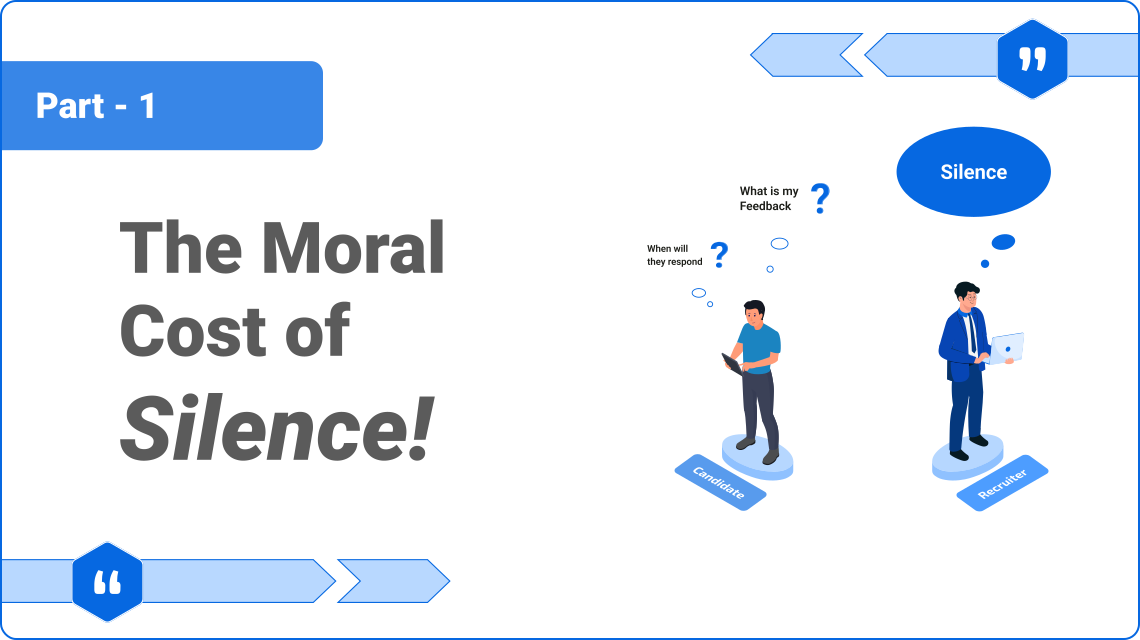
Why Interview Feedback Is a Must: The Moral Cost of Silence!
Remember the thrill of landing that interview? You prepped like a pro, maybe even practiced your “I’m a team player” spiel in front of your cat (who, let's be honest, remained utterly unimpressed, probably wondering when the next meal was coming). You walked out feeling like you’d just nailed a superhero audition, the recruiter’s breezy “We’ll be in touch!” echoing in your triumphant ears like a personalized victory anthem. But then… the sound of silence. Days morph into weeks, and your inbox becomes a digital wasteland, haunted only by desperate pleas for discount socks and those annoying "re-engage with us!" emails from long-forgotten newsletters.
Welcome to the Hiring Black Hole, where no response after an interview breeds gnawing job search frustration and the creeping tendrils of anxiety. It's less a process and more a slow, agonizing descent into existential dread.
If you're nodding so hard your neck hurts, take heart. Even history's most revered moral titans would be side-eyeing this hiring absurdity, probably wondering if humanity peaked before the invention of the "send" button. Let's imagine how they'd call out the silence and demand interview feedback as a fundamental matter of principle, addressing recruiter ghosting head-on. After all, if anyone understands the moral weight of human interaction, it's these legends.
Moral Giants vs. the Ghosting Epidemic: A Matter of Principle
Mahatma Gandhi: Truth Demands a Response (and So Does Your Application)
Philosophical Lens: Observing the modern hiring process through the eyes of a steadfast proponent of truth (satya) and non-violence (ahimsa).
Philosophy: Gandhi, the ultimate champion of human dignity, believed every interaction and system should uphold inherent worth. Transparency and respect weren't just lofty ideals; they were non-negotiable pillars of existence. For him, silence was never neutral; it was an act with consequences.
Reaction to Silence: Picture the Mahatma, his wisdom radiating, observing a job seeker pouring their soul into an application, only to be met with the deafening no response after an interview. He’d see this silence not as a mere oversight, but as a subtle act of disrespect, a passive aggression that chips away at truth. “Silence becomes cowardice when occasion demands speaking out the whole truth and acting accordingly,” he wisely stated. In Gandhi's eyes, being ghosted after an interview is a minor act of violence against fairness itself, a silent erosion of trust in the system. It needs a corporate Dandi March for decency, where the absence of a response is the unjust salt tax.
Takeaway: Interview feedback is seva—a selfless service that acknowledges a candidate’s inherent worth. Silence after an interview is a betrayal of the truth and the equality Gandhi so fiercely advocated for, leaving candidates feeling like they've submitted their souls to a void with no clarity on the outcome. Gandhi’s unwavering commitment to truth and the inherent dignity of every individual lays the groundwork for understanding why acknowledging potential isn't just good manners, but a moral imperative.
Gandhi’s truth bomb sets the stage, but Swami Vivekananda is ready to take it further, urging recruiters to spark potential with feedback, not snuff it out with silence.
Swami Vivekananda: Unleashing Potential Through Timely Feedback
Philosophical Lens: Examining the impact of hiring silence from the perspective of an advocate for human potential and growth.
Philosophy: Vivekananda passionately believed that every individual harbors infinite potential, a dormant volcano waiting to erupt with greatness. The purpose of human interaction, especially in areas of development and opportunity, is to ignite that spark. Recognizing the nascent greatness in others is not just a kindness; it's a sacred duty, a form of spiritual nurturing.
Reaction to Silence: Imagine Vivekananda, his spirit ablaze with the vision of empowered individuals, observing a candidate passionately articulating their skills and aspirations, only to encounter a complete lack of feedback after an interview. He’d view this silence as a missed opportunity, a squandered chance to foster growth and enlightenment. “Arise, awake, and stop not till the goal is reached,” he famously urged. Ghosting after an interview stalls that very journey, denying candidates the crucial insights needed to reach their full potential and fueling anxiety. Interview feedback, therefore, becomes a fundamental guiding principle, a beacon for future endeavors.
Takeaway: Interview feedback is the recruiter’s sacred duty, igniting potential and guiding growth, like sunlight for a budding sapling. Radio silence after an interview stunts the very development Vivekananda championed, directly addressing the problem of struggling to get interview feedback. This emphasis on nurturing potential and the transformative power of guidance finds a compassionate parallel in the philosophy of the next visionary, who dedicated her life to serving the most vulnerable.
Vivekananda’s call to ignite potential is powerful, but Mother Teresa would add a softer touch, reminding us that even a rejection can be a hug in disguise.
Mother Teresa: Even in Rejection, There Must Be Care
Philosophical Lens: Reflecting on the necessity of compassion in hiring, even in the act of rejection.
Philosophy: Mother Teresa dedicated her life to serving the forgotten, believing that every single person, regardless of their circumstances or perceived significance, deserves compassion and care. Kindness was her guiding principle, and neglect, in any form, was a profound failing. For her, even the smallest act of recognition held immense power.
Reaction to Silence: Picture Mother Teresa, her eyes radiating profound kindness, witnessing a job seeker pouring their heart and hope into an interview, only to be met with the disheartening no response after an interview. She’d be deeply saddened—not for the outcome, but for the human being left adrift, silently wondering, “Was I invisible?” “The most terrible poverty is loneliness and the feeling of being unloved,” she famously said, highlighting the power of even small acts of compassion. Interview feedback is that one small act of love, a digital hug, offering solace in job search frustration, ensuring no one feels like just another discarded resume.
Takeaway: Interview feedback is a fundamental act of care and recognition, gently easing anxiety after a job interview with a touch of much-needed humanity. It's the antidote to being left in the dark after an interview, a beacon of light in an often-impersonal process. Mother Teresa’s profound compassion for the overlooked and her belief in the inherent worth of every individual resonate deeply with a leader who fought tirelessly for the rights and dignity of marginalized communities facing systemic injustice.
Mother Teresa’s compassion warms the heart, but Ambedkar’s fierce fight for equity reminds us that silence isn’t just unkind—it’s a systemic snub.
Dr. B.R. Ambedkar: Silence Speaks Volumes of Systemic Neglect
Philosophical Lens: Analyzing silent hiring through the lens of systemic justice and the fight against institutional indifference.
Philosophy: Ambedkar, the brilliant architect of India’s Constitution, dedicated his life to battling for dignity and equity, particularly for the marginalized. He argued that just systems must actively affirm the existence and worth of every individual, ensuring no one is rendered invisible or insignificant. For him, silence was often a tool of oppression.
Reaction to Silence: Imagine Ambedkar eloquently laying out his powerful vision for a truly equitable society, observing how the hiring process treats individuals, only to be met with the cold indifference of a lack of feedback after an interview. He’d likely see this silence not just as impoliteness, but as a symptom of deeper institutional apathy, echoing the very caste oppression he fought so vehemently against. “Indifferentism is the worst kind of disease that can affect people,” he warned. Interview feedback is not a mere courtesy; it’s a fundamental right, a small yet vital act that confronts job search frustration with the principles of fairness, dignity, and justice. It’s the antithesis of systemic erasure.
Takeaway: Interview feedback isn’t just a professional nicety; it’s equity in action, a simple yet powerful affirmation of dignity, respect, and transparency. Ghosting, in contrast, echoes the same indifference that sustains systemic inequality, making silence not just discourteous but unjust. Ambedkar’s powerful demand for equality and the dismantling of discriminatory systems aligns perfectly with a leader who dedicated his life to the fight for civil rights and the promise of justice for all.
Ambedkar’s demand for fairness echoes across borders, and Nelson Mandela’s ubuntu brings it home, reminding us that feedback is about shared humanity.
Nelson Mandela: True Freedom Includes the Closure of Feedback
Philosophical Lens: Viewing feedback as an essential component of human freedom and the principle of ubuntu.
Philosophy: Mandela’s life was a powerful testament to the principles of fairness and ubuntu—“I am because we are." He believed that recognizing the shared humanity of others is the very bedrock of justice and liberation. True freedom, for him, extended beyond physical chains to include the dignity of the human spirit.
Reaction to Silence: Imagine Mandela, fresh from the monumental task of uniting a nation, observing a candidate facing the disheartening lack of feedback after an interview. He’d undoubtedly see this as a subtle yet palpable injustice, shackling candidates with unnecessary anxiety after a job interview, denying them closure. “To be free is not merely to cast off one’s chains, but to live in a way that respects and enhances the freedom of others,” he eloquently stated. Interview feedback, even in the form of a rejection, is a liberating act that respects the candidate’s journey and time, providing much-needed clarity after being left in the dark. It’s freedom from limbo.
Takeaway: Interview feedback is a crucial step towards a more just and equitable hiring process, breaking the chains of job search frustration with clarity and respect. Mandela’s unwavering fight for fairness and human dignity, even in the face of adversity, mirrors the compassionate approach of a spiritual leader who emphasized the healing power of words and the pain inflicted by silence.
Mandela’s fight for freedom is a rallying cry, but the Dalai Lama adds a gentle nudge, showing us that feedback heals where silence wounds.
Dalai Lama: Words Can Heal, But Silence Deepens the Wound
Philosophical Lens: Considering the act of giving feedback as a demonstration of compassion and alleviating suffering.
Philosophy: The Dalai Lama’s profound compassion views every interaction as a precious opportunity to alleviate suffering. He believes that even the smallest acts of kindness possess the power to heal and connect, fostering understanding and reducing unnecessary pain. For him, conscious action, even a simple word, can be a profound act of love.
Reaction to Silence: Imagine the Dalai Lama, his gentle smile radiating peace, observing a job seeker navigating the interview process, only to be met with the disheartening no response after an interview. “If you think you are too small to make a difference, try sleeping with a mosquito,” he wisely quipped, highlighting the significant impact of seemingly small actions. Silence breeds unnecessary anxiety after a job interview, a subtle form of suffering, while timely interview feedback is a compassionate act that offers solace and reduces job search frustration. It’s like a soothing balm on a wound.
Takeaway: Interview feedback is a simple yet profound healing gesture, a kind word offered during a stressful and often isolating job search, especially when struggling to get interview feedback. The Dalai Lama's emphasis on compassion and the impact of even small acts of kindness connects with a leader whose life's work centered on empowering the marginalized and giving voice to their struggles.
The Dalai Lama’s compassion is a balm, but Kalam’s mentorship lights a fire, urging recruiters to fuel dreams with feedback.
Dr. A.P.J. Abdul Kalam: Nurturing Dreams with the Seeds of Feedback
Philosophical Lens: Highlighting the role of feedback in mentorship, innovation, and the fulfillment of dreams.
Philosophy: Kalam, the beloved "People's President," lived for mentorship and the power of innovation. He firmly believed that dreams flourish through guidance and knowledge, inspiring countless young minds to reach for the stars. For him, sharing knowledge and providing direction was a fundamental duty for anyone in a position of influence.
Reaction to Silence: Picture Kalam, sharing his groundbreaking vision for innovation and progress, observing the disconnect when a candidate, bursting with potential, is met with the frustrating lack of feedback after an interview. He’d see this as a break in the vital chain of knowledge transfer, a squandered opportunity for growth. “Dreams are not those which come while we are sleeping, but those which do not let us sleep,” he wisely observed. Silence suffocates those very dreams, exacerbating job search frustration. Interview feedback acts as crucial mentorship, fertilizing the aspirations of future leaders and innovators, ensuring their potential doesn't wither in the dark.
Takeaway: Interview feedback is the essential spark that ignites and nurtures dreams. Recruiter ghosting dims the very belief in one's potential that Kalam so tirelessly fostered. This leaves candidates feeling like their dreams are on indefinite hold after being ghosted after an interview. Kalam’s dedication to mentorship and his belief in the power of guidance to unlock potential finds a powerful echo. It aligns with the advocacy of a leader who championed the right to be seen and heard, fighting against the erasure of silence.
Kalam’s spark for dreamers finds an ally in you, dear reader, because you know exactly what it’s like to be ghosted in the job hunt.
Your Story: The Unseen Leader
You are the unseen leader in this relentless, soul-testing gauntlet of job searching—a journey where hope battles silence. Imagine a world where every interview concludes with a nod to your courage, where your vulnerability is met with respect, not ignored. Instead of cold silence, picture a response that honors your effort—a simple acknowledgment that whispers, “We see you. You matter.” This isn't just about securing a job; it's about reclaiming your inherent worth in a system that too often overlooks the human behind the resume.
You've been there—heart racing, practicing answers in the mirror, pouring your dreams into every word, only to face the chilling void of an empty inbox. That silence isn't just a missed email; it's a wound. It's the world subtly whispering, "Did you even matter?" But you do. You are not merely a candidate; you are a fighter, carrying your aspirations through rejection and uncertainty, slaying doubt with every application sent.
Demand more than silence: Seek feedback that fuels your fire, that sharpens your blade for the next battle. And know that you're not alone in this fight; Connect EC is built to support your moral cause, transforming that deafening silence into the clarity and respect you deserve. Your time, your unique story, your relentless pursuit—these are not disposable. They are the heartbeat of your journey. You are not just searching for a job; you are forging a path to a future that sees you, hears you, and values you. Keep fighting, because you are the hero this story needs.
Why Interview Feedback Isn't a Favor—It's a Moral Imperative
From the profound wisdom of Gandhi to the insightful perspectives of Vivekananda and Kalam, and from the unwavering principles of Mandela, Mother Teresa, and Ambedkar, one truth emerges with crystal clarity: lack of feedback after an interview isn’t just impolite—it’s a fundamental betrayal of human dignity. Their core philosophies—rooted in truth, growth, dreams, justice, compassion, and equity—unanimously demand that every candidate deserves to be seen, heard, and treated with respect. Silence screams, “You are disposable,” fueling the flames of anxiety after a job interview and deepening the chasm of job search frustration. But, timely and thoughtful interview feedback? It’s a vital lifeline that unequivocally communicates, “Your effort and your humanity matter, even if you weren't the right fit for this particular role.”
This collective moral outrage isn’t just a fascinating historical footnote; it’s a powerful wake-up call for the often impersonal world of modern hiring, prompting us to examine the deeper emotional repercussions. And this is precisely where Connect EC, our brilliant new platform (remember our naming journey? It was not easy, but now it’s here!), comes in. Connect EC is built upon this very moral foundation, utilizing innovative and gamified nudges to ensure that interview feedback flows freely, transforming the dreaded Hiring Black Hole into a beacon of clarity and respect and ending recruiter ghosting. It’s like a digital hero, swooping in to save you from the abyss of uncertainty.
Candidates Solution01/02
Candidates
Why Interview Feedback Is a Must: The Moral Cost of Silence!
Remember the thrill of landing that interview? You prepped like a pro, maybe even practiced your “I’m a team player” spiel in front of your cat (who, let's be honest, remained utterly unimpressed, probably wondering when the next meal was coming). You walked out feeling like you’d just nailed a superhero audition, the recruiter’s breezy “We’ll be in touch!” echoing in your triumphant ears like a personalized victory anthem. But then… the sound of silence. Days morph into weeks, and your inbox becomes a digital wasteland, haunted only by desperate pleas for discount socks and those annoying "re-engage with us!" emails from long-forgotten newsletters.
Welcome to the Hiring Black Hole, where no response after an interview breeds gnawing job search frustration and the creeping tendrils of anxiety. It's less a process and more a slow, agonizing descent into existential dread.
If you're nodding so hard your neck hurts, take heart. Even history's most revered moral titans would be side-eyeing this hiring absurdity, probably wondering if humanity peaked before the invention of the "send" button. Let's imagine how they'd call out the silence and demand interview feedback as a fundamental matter of principle, addressing recruiter ghosting head-on. After all, if anyone understands the moral weight of human interaction, it's these legends.
Moral Giants vs. the Ghosting Epidemic: A Matter of Principle
Mahatma Gandhi: Truth Demands a Response (and So Does Your Application)
Philosophical Lens: Observing the modern hiring process through the eyes of a steadfast proponent of truth (satya) and non-violence (ahimsa).
Philosophy: Gandhi, the ultimate champion of human dignity, believed every interaction and system should uphold inherent worth. Transparency and respect weren't just lofty ideals; they were non-negotiable pillars of existence. For him, silence was never neutral; it was an act with consequences.
Reaction to Silence: Picture the Mahatma, his wisdom radiating, observing a job seeker pouring their soul into an application, only to be met with the deafening no response after an interview. He’d see this silence not as a mere oversight, but as a subtle act of disrespect, a passive aggression that chips away at truth. “Silence becomes cowardice when occasion demands speaking out the whole truth and acting accordingly,” he wisely stated. In Gandhi's eyes, being ghosted after an interview is a minor act of violence against fairness itself, a silent erosion of trust in the system. It needs a corporate Dandi March for decency, where the absence of a response is the unjust salt tax.
Takeaway: Interview feedback is seva—a selfless service that acknowledges a candidate’s inherent worth. Silence after an interview is a betrayal of the truth and the equality Gandhi so fiercely advocated for, leaving candidates feeling like they've submitted their souls to a void with no clarity on the outcome. Gandhi’s unwavering commitment to truth and the inherent dignity of every individual lays the groundwork for understanding why acknowledging potential isn't just good manners, but a moral imperative.
Gandhi’s truth bomb sets the stage, but Swami Vivekananda is ready to take it further, urging recruiters to spark potential with feedback, not snuff it out with silence.
Swami Vivekananda: Unleashing Potential Through Timely Feedback
Philosophical Lens: Examining the impact of hiring silence from the perspective of an advocate for human potential and growth.
Philosophy: Vivekananda passionately believed that every individual harbors infinite potential, a dormant volcano waiting to erupt with greatness. The purpose of human interaction, especially in areas of development and opportunity, is to ignite that spark. Recognizing the nascent greatness in others is not just a kindness; it's a sacred duty, a form of spiritual nurturing.
Reaction to Silence: Imagine Vivekananda, his spirit ablaze with the vision of empowered individuals, observing a candidate passionately articulating their skills and aspirations, only to encounter a complete lack of feedback after an interview. He’d view this silence as a missed opportunity, a squandered chance to foster growth and enlightenment. “Arise, awake, and stop not till the goal is reached,” he famously urged. Ghosting after an interview stalls that very journey, denying candidates the crucial insights needed to reach their full potential and fueling anxiety. Interview feedback, therefore, becomes a fundamental guiding principle, a beacon for future endeavors.
Takeaway: Interview feedback is the recruiter’s sacred duty, igniting potential and guiding growth, like sunlight for a budding sapling. Radio silence after an interview stunts the very development Vivekananda championed, directly addressing the problem of struggling to get interview feedback. This emphasis on nurturing potential and the transformative power of guidance finds a compassionate parallel in the philosophy of the next visionary, who dedicated her life to serving the most vulnerable.
Vivekananda’s call to ignite potential is powerful, but Mother Teresa would add a softer touch, reminding us that even a rejection can be a hug in disguise.
Mother Teresa: Even in Rejection, There Must Be Care
Philosophical Lens: Reflecting on the necessity of compassion in hiring, even in the act of rejection.
Philosophy: Mother Teresa dedicated her life to serving the forgotten, believing that every single person, regardless of their circumstances or perceived significance, deserves compassion and care. Kindness was her guiding principle, and neglect, in any form, was a profound failing. For her, even the smallest act of recognition held immense power.
Reaction to Silence: Picture Mother Teresa, her eyes radiating profound kindness, witnessing a job seeker pouring their heart and hope into an interview, only to be met with the disheartening no response after an interview. She’d be deeply saddened—not for the outcome, but for the human being left adrift, silently wondering, “Was I invisible?” “The most terrible poverty is loneliness and the feeling of being unloved,” she famously said, highlighting the power of even small acts of compassion. Interview feedback is that one small act of love, a digital hug, offering solace in job search frustration, ensuring no one feels like just another discarded resume.
Takeaway: Interview feedback is a fundamental act of care and recognition, gently easing anxiety after a job interview with a touch of much-needed humanity. It's the antidote to being left in the dark after an interview, a beacon of light in an often-impersonal process. Mother Teresa’s profound compassion for the overlooked and her belief in the inherent worth of every individual resonate deeply with a leader who fought tirelessly for the rights and dignity of marginalized communities facing systemic injustice.
Mother Teresa’s compassion warms the heart, but Ambedkar’s fierce fight for equity reminds us that silence isn’t just unkind—it’s a systemic snub.
Dr. B.R. Ambedkar: Silence Speaks Volumes of Systemic Neglect
Philosophical Lens: Analyzing silent hiring through the lens of systemic justice and the fight against institutional indifference.
Philosophy: Ambedkar, the brilliant architect of India’s Constitution, dedicated his life to battling for dignity and equity, particularly for the marginalized. He argued that just systems must actively affirm the existence and worth of every individual, ensuring no one is rendered invisible or insignificant. For him, silence was often a tool of oppression.
Reaction to Silence: Imagine Ambedkar eloquently laying out his powerful vision for a truly equitable society, observing how the hiring process treats individuals, only to be met with the cold indifference of a lack of feedback after an interview. He’d likely see this silence not just as impoliteness, but as a symptom of deeper institutional apathy, echoing the very caste oppression he fought so vehemently against. “Indifferentism is the worst kind of disease that can affect people,” he warned. Interview feedback is not a mere courtesy; it’s a fundamental right, a small yet vital act that confronts job search frustration with the principles of fairness, dignity, and justice. It’s the antithesis of systemic erasure.
Takeaway: Interview feedback isn’t just a professional nicety; it’s equity in action, a simple yet powerful affirmation of dignity, respect, and transparency. Ghosting, in contrast, echoes the same indifference that sustains systemic inequality, making silence not just discourteous but unjust. Ambedkar’s powerful demand for equality and the dismantling of discriminatory systems aligns perfectly with a leader who dedicated his life to the fight for civil rights and the promise of justice for all.
Ambedkar’s demand for fairness echoes across borders, and Nelson Mandela’s ubuntu brings it home, reminding us that feedback is about shared humanity.
Nelson Mandela: True Freedom Includes the Closure of Feedback
Philosophical Lens: Viewing feedback as an essential component of human freedom and the principle of ubuntu.
Philosophy: Mandela’s life was a powerful testament to the principles of fairness and ubuntu—“I am because we are." He believed that recognizing the shared humanity of others is the very bedrock of justice and liberation. True freedom, for him, extended beyond physical chains to include the dignity of the human spirit.
Reaction to Silence: Imagine Mandela, fresh from the monumental task of uniting a nation, observing a candidate facing the disheartening lack of feedback after an interview. He’d undoubtedly see this as a subtle yet palpable injustice, shackling candidates with unnecessary anxiety after a job interview, denying them closure. “To be free is not merely to cast off one’s chains, but to live in a way that respects and enhances the freedom of others,” he eloquently stated. Interview feedback, even in the form of a rejection, is a liberating act that respects the candidate’s journey and time, providing much-needed clarity after being left in the dark. It’s freedom from limbo.
Takeaway: Interview feedback is a crucial step towards a more just and equitable hiring process, breaking the chains of job search frustration with clarity and respect. Mandela’s unwavering fight for fairness and human dignity, even in the face of adversity, mirrors the compassionate approach of a spiritual leader who emphasized the healing power of words and the pain inflicted by silence.
Mandela’s fight for freedom is a rallying cry, but the Dalai Lama adds a gentle nudge, showing us that feedback heals where silence wounds.
Dalai Lama: Words Can Heal, But Silence Deepens the Wound
Philosophical Lens: Considering the act of giving feedback as a demonstration of compassion and alleviating suffering.
Philosophy: The Dalai Lama’s profound compassion views every interaction as a precious opportunity to alleviate suffering. He believes that even the smallest acts of kindness possess the power to heal and connect, fostering understanding and reducing unnecessary pain. For him, conscious action, even a simple word, can be a profound act of love.
Reaction to Silence: Imagine the Dalai Lama, his gentle smile radiating peace, observing a job seeker navigating the interview process, only to be met with the disheartening no response after an interview. “If you think you are too small to make a difference, try sleeping with a mosquito,” he wisely quipped, highlighting the significant impact of seemingly small actions. Silence breeds unnecessary anxiety after a job interview, a subtle form of suffering, while timely interview feedback is a compassionate act that offers solace and reduces job search frustration. It’s like a soothing balm on a wound.
Takeaway: Interview feedback is a simple yet profound healing gesture, a kind word offered during a stressful and often isolating job search, especially when struggling to get interview feedback. The Dalai Lama's emphasis on compassion and the impact of even small acts of kindness connects with a leader whose life's work centered on empowering the marginalized and giving voice to their struggles.
The Dalai Lama’s compassion is a balm, but Kalam’s mentorship lights a fire, urging recruiters to fuel dreams with feedback.
Dr. A.P.J. Abdul Kalam: Nurturing Dreams with the Seeds of Feedback
Philosophical Lens: Highlighting the role of feedback in mentorship, innovation, and the fulfillment of dreams.
Philosophy: Kalam, the beloved "People's President," lived for mentorship and the power of innovation. He firmly believed that dreams flourish through guidance and knowledge, inspiring countless young minds to reach for the stars. For him, sharing knowledge and providing direction was a fundamental duty for anyone in a position of influence.
Reaction to Silence: Picture Kalam, sharing his groundbreaking vision for innovation and progress, observing the disconnect when a candidate, bursting with potential, is met with the frustrating lack of feedback after an interview. He’d see this as a break in the vital chain of knowledge transfer, a squandered opportunity for growth. “Dreams are not those which come while we are sleeping, but those which do not let us sleep,” he wisely observed. Silence suffocates those very dreams, exacerbating job search frustration. Interview feedback acts as crucial mentorship, fertilizing the aspirations of future leaders and innovators, ensuring their potential doesn't wither in the dark.
Takeaway: Interview feedback is the essential spark that ignites and nurtures dreams. Recruiter ghosting dims the very belief in one's potential that Kalam so tirelessly fostered. This leaves candidates feeling like their dreams are on indefinite hold after being ghosted after an interview. Kalam’s dedication to mentorship and his belief in the power of guidance to unlock potential finds a powerful echo. It aligns with the advocacy of a leader who championed the right to be seen and heard, fighting against the erasure of silence.
Kalam’s spark for dreamers finds an ally in you, dear reader, because you know exactly what it’s like to be ghosted in the job hunt.
Your Story: The Unseen Leader
You are the unseen leader in this relentless, soul-testing gauntlet of job searching—a journey where hope battles silence. Imagine a world where every interview concludes with a nod to your courage, where your vulnerability is met with respect, not ignored. Instead of cold silence, picture a response that honors your effort—a simple acknowledgment that whispers, “We see you. You matter.” This isn't just about securing a job; it's about reclaiming your inherent worth in a system that too often overlooks the human behind the resume.
You've been there—heart racing, practicing answers in the mirror, pouring your dreams into every word, only to face the chilling void of an empty inbox. That silence isn't just a missed email; it's a wound. It's the world subtly whispering, "Did you even matter?" But you do. You are not merely a candidate; you are a fighter, carrying your aspirations through rejection and uncertainty, slaying doubt with every application sent.
Demand more than silence: Seek feedback that fuels your fire, that sharpens your blade for the next battle. And know that you're not alone in this fight; Connect EC is built to support your moral cause, transforming that deafening silence into the clarity and respect you deserve. Your time, your unique story, your relentless pursuit—these are not disposable. They are the heartbeat of your journey. You are not just searching for a job; you are forging a path to a future that sees you, hears you, and values you. Keep fighting, because you are the hero this story needs.
Why Interview Feedback Isn't a Favor—It's a Moral Imperative
From the profound wisdom of Gandhi to the insightful perspectives of Vivekananda and Kalam, and from the unwavering principles of Mandela, Mother Teresa, and Ambedkar, one truth emerges with crystal clarity: lack of feedback after an interview isn’t just impolite—it’s a fundamental betrayal of human dignity. Their core philosophies—rooted in truth, growth, dreams, justice, compassion, and equity—unanimously demand that every candidate deserves to be seen, heard, and treated with respect. Silence screams, “You are disposable,” fueling the flames of anxiety after a job interview and deepening the chasm of job search frustration. But, timely and thoughtful interview feedback? It’s a vital lifeline that unequivocally communicates, “Your effort and your humanity matter, even if you weren't the right fit for this particular role.”
This collective moral outrage isn’t just a fascinating historical footnote; it’s a powerful wake-up call for the often impersonal world of modern hiring, prompting us to examine the deeper emotional repercussions. And this is precisely where Connect EC, our brilliant new platform (remember our naming journey? It was not easy, but now it’s here!), comes in. Connect EC is built upon this very moral foundation, utilizing innovative and gamified nudges to ensure that interview feedback flows freely, transforming the dreaded Hiring Black Hole into a beacon of clarity and respect and ending recruiter ghosting. It’s like a digital hero, swooping in to save you from the abyss of uncertainty.