Struggling to decode why candidates vanish after saying ‘YES’?
The Offer No-Show Mystery: How Belonging & Identity Lock-In Prevent Vanishing Acts
Ready for part two? We’ve chatted about the Post-Offer Fog and built the Belonging bridge. We know why candidates don't show up after an offer—it's not just about a better offer, but a better emotional connection. We've even tackled candidate ghosting after an offer by understanding the invisible threads that hold commitment together.
They said yes. You celebrated. But in the shadows of that celebration, doubt starts whispering: “Is this really me?” Enter Loki — the shapeshifter of candidate emotions. He doesn’t need a reason to create chaos — just a moment of hesitation. If that identity question goes unanswered, it doesn’t matter how great the package was — the emotional illusion wins, and they vanish.
In some industries, up to 40% of accepted candidates disappear before Day One. The reason? Not better offers — but a better emotional experience elsewhere. Now, we're building the bridge to prevent that. And the planks of that bridge? They’re built with belonging — before Day One even begins.
Want to see how Connect EC makes identity lock-in real, not just theoretical? Stay with us.
Part 2: Identity Lock-In – Help Candidates See Their Future Self in Your Team
You've got the "yes!"The appreciation mails are rolling in. Your hiring manager is already using words like "game-changer."
But what about your candidate?
They're still mentally trying on that company hoodie, wondering if it truly fits.
Even after accepting the offer, candidates are silently asking one crucial question:"Can I really see myself here?"
If that answer is anything less than a resounding "yes," we've still got work to do.
Think of your hiring process as a thrilling trilogy. Part 1: The Courtship. Part 2: The Connection. And Part 3? The Becoming. This is where your candidate doesn't just accept a job offer; they accept a new version of themselves. This is the metamorphosis moment.
Right now, your candidate is goo. Yep — not a caterpillar, not yet a butterfly. They’ve shed the safety of their old job but haven’t yet grown their wings in your world. This identity goo is terrifying — unless you show them what they’re becoming. It's like Clark Kent finally shedding his glasses. The world sees Superman, but more importantly, he starts to see it too. Identity isn't just about role clarity; it's about emotional alignment.
Remember that" Post-Offer Fog from Part 1, where candidates wrestled with cognitive dissonance? Or that critical need for "Belonging we discussed in Part 1, which calms the fear of the unknown? Well, even after they feel like part of the crew, there's one final, profound shift: they need to see themselves in the role, thriving. This is the danger zone recruiters often underestimate—the in-between. Candidates are no longer who they were at their old job, but they haven't fully stepped into who they're becoming at yours. It's identity limbo, and it's where doubt breeds, leading to an offer no-show.
And here’s the trick: even after the 'yes', Loki lingers. He whispers that the old identity was safer, more familiar. He tempts them with alternate versions of themselves — at a competitor, freelancing, staying put. If you don’t help them define who they’re becoming, he will.
Candidates aren't just looking for jobs; they're looking for new identities that fit their personal and professional stories. They're seeking a place where their future self can truly shine, where they can become the person they aspire to be. This is a deeply psychological drive, far beyond just a paycheck or a title. This, my friend, is all about identity lock-in.
Put yourself in their shoes: You’ve quit your last job. You’re not yet on payroll. You’re floating — identity-less. No team channel pings. No manager check-ins. Just... silence. Wouldn’t you start questioning if you made the right leap?
So, before you celebrate that "yes" too hard, ask yourself: Have you truly helped your candidate see who they're about to become, or are they still reaching for clarity?
The Mind-Bending "Why" Behind Identity Commitment
The psychology behind this deep identity commitment is absolutely fascinating—and it's your secret weapon against the dreaded no-show.
- Self-Perception Theory: This one's a game-changer. Psychologist Daryl Bem’s Self-Perception Theory explains how people form beliefs about themselves based on their own behaviors and observations. Think about it: if they start acting like an employee (even before Day One), they begin feeling like one. This could be as simple as joining a Slack channel, helping brainstorm a small idea, or even just mentally setting up their new email signature. The more they rehearse the role, the more real it becomes. This is a powerful antidote to offer no-show reasons.
- Future Self Visualization & Psychological Time Travel: This isn't just wishful thinking; it's a powerful motivator rooted in neuroscience. The brain craves consistency. Once someone starts identifying with a future version of themselves, it begins building mental scaffolding to support that identity. Your job now is to help them time travel—to step into a future where they’re already thriving in the role, solving problems, winning praise, and making their mark. Once they emotionally arrive there, backing out becomes a detour from their story. But if there’s no vivid future to step into, there’s no framework. And without that? Even the best offer letter gathers digital dust, potentially becoming another "offer accepted but candidate didn't join" statistic.
- Narrative Identity: We all have a personal story, a narrative that shapes our choices and explains who we are. We instinctively make life choices to maintain a coherent, meaningful personal story. When candidates can visualize and emotionally own their role in your company's story, their commitment deepens exponentially. It’s about aligning their personal "why" with your organizational mission, transforming a job offer into a vital chapter in their life story.
A UX designer we spoke to said, “When my future manager casually mentioned how she saw me leading cross-functional design sprints in six months, I felt like I belonged to a story — not just a seat.”
Recruiter Confession: The Vision Blind Spot
We spend so much time making candidates look good for us (on paper, in interviews), but how much time do we spend helping them look good to themselves in the new role? It's a common blind spot. We celebrate the offer acceptance, hand over a standard welcome packet, and then… hope they connect the dots. It’s like throwing confetti at a runner mid-marathon and expecting them to know where the finish line is. This oversight is a frequent offer no-show reason.
Ever started a gym membership with big dreams, only to bail after two visits because you didn’t feel like you belonged, or couldn’t picture yourself as a "gym person"? Now imagine switching your entire career—that’s the scale we’re talking about here. If they can’t see themselves thriving in your organization, they won’t even lace up for Day One.
Your candidate is booking a one-way ticket to a new city (your company!). They’ve committed to the flight (the offer), and you’ve helped them feel like they've got some friendly faces waiting (belonging). But now, they need to visualize their new apartment, their new commute, their new favorite coffee shop. They need to see their life there. Your job? To hand them the map, introduce them to the cool spots, and paint a vivid picture of their thriving future.
Think of identity lock-in like setting wet cement. The candidate’s future imprint is fresh and shapeable—but if you don’t guide the form quickly, doubt hardens faster than enthusiasm. This is crucial for HR dealing with offer no-shows.
Stuck in the Middle of Their Own Story
Imagine this:
The candidate’s accepted the offer. The inbox pings. The forms begin. The calendar starts ticking. But something’s missing — and they can feel it.
They're in the story, but not of it yet.
The Identity Gap No One Talks About
You told them what they’ll do. But did you show them who they’ll become?
You gave them deadlines. But did you paint a picture of their Day 47 win?
You promised onboarding. But did you let them emotionally rehearse belonging, impact, and purpose?
Without those moments, the bridge between “offer accepted” and “I’m already there” collapses.
Where Visualization Breaks
An offer letter that’s all duties and digits.
Pre-start emails that feel more like checklists than connection.
A silence where their future team should be.
Each one quietly erases the mental scaffoldingtheir brain needs to build identity. Instead of “I can see myself thriving here,” they’re stuck in “Let’s wait and see.”
But Give Them a Future Worth Rehearsing…
And everything shifts. They see themselves solving real problems. They picture a team that cheers them on. They imagine praise, progress, and purpose.
Now backing out? That’s not just rejecting a company — it’sabandoning the future they’ve already started living.
Future self-visualization isn’t extra. It’s essential. Because even the best offer fades when the future goes fuzzy
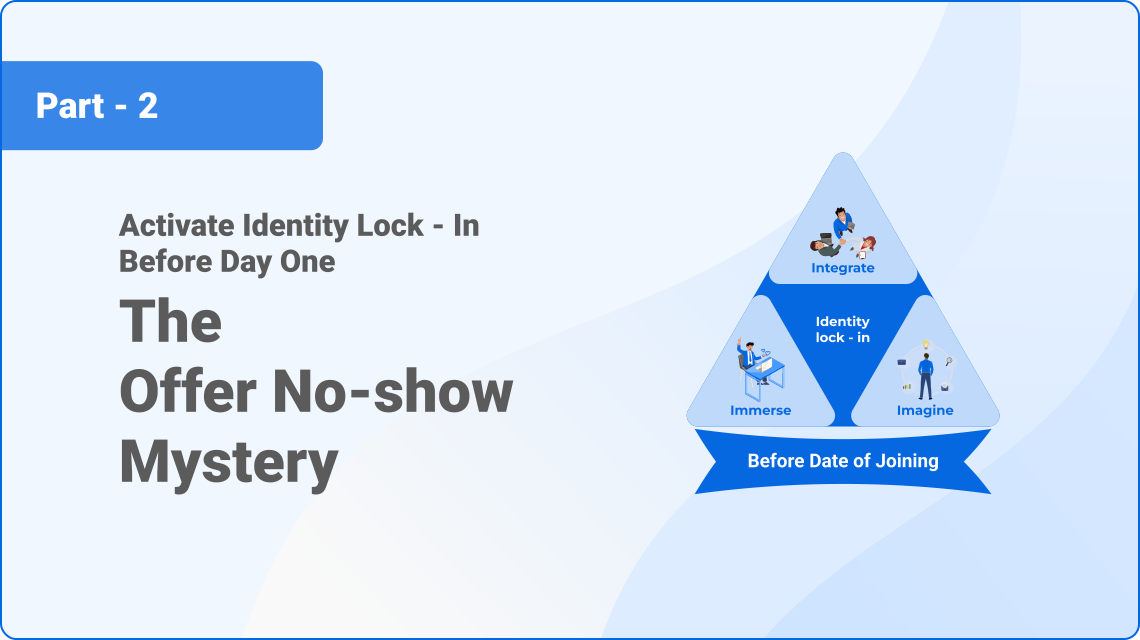
The Identity Lock-In Triangle
To turn “I accepted the offer” into “I see myself thriving here,” candidates need more than onboarding plans — they need identity scaffolding.
Use these three pillars to guide every post-offer touchpoint:
1. Immerse — Let them feel your culture.
Don’t just tell them what your values are — let them experience them. Use storytelling, team messages, early rituals, and sneak previews of your vibe. The goal: emotional familiarity before Day One.
2. Imagine — Help them see themselves thriving.
Invite them to mentally rehearse success. Use visual cues, stories of real team wins, and future-paced language that says, “You belong here, and this is where you shine.”
3. Integrate — Give them a role to play, even before they start.
Whether it’s contributing to a roadmap, sharing their goals, or joining pre-start Slack intros, this early participation builds psychological ownership — long before the ID badge is printed.
How to Activate Identity Lock-In
Identity lock-in isn’t about pressure. It’s about permission — guiding candidates to see their own future inside your walls.
30-60-90 Roadmaps (With a Twist!)
Don’t just outline tasks — paint milestones they can emotionally anticipate. Invite them to co-shape part of their journey. A roadmap co-created is a roadmap owned. This is how the “thriving future self” starts to take root.
Storytelling that Sparks Identity
Skip the bullet points. Shift from “You’ll be responsible for X” to “You’ll become the one who leads Y.” Help them see their growth arc, not just their duties. Candidates don’t fall in love with job descriptions — they fall in love with their future self in the role.
Reflection that Builds Ownership
Ask questions that echo beyond the call:
- “Six months from now, what would success look like for you?”
- “Six months from now, what would success look like for you?”
These aren’t check-ins. They’re mini identity-building rituals.
Invite Their Personal Narrative
Encourage candidates to articulate why this role matters to them. When they say, “I chose this because it aligns with my drive to build sustainable tech,” that’s not just a reason. That’s identity lock-in — and it’s ghost-proof.
Bottom line:
If they can feel it, see it, and step into it early, they won’t walk away. They’ll already be halfway home — before Day One even begins.
The Outcome: From Offer to Ownership
When candidates can see their future, they start to step into it. And when they begin to own that future — not just the job, but the identity that comes with it — walking away no longer makes sense.
They’ve already initiated a quiet but powerful reinvention. At that point, saying “yes” isn’t just a decision — it’s a natural, inevitable next chapter.
That’s how you stop the story from ending at the offer. That’s how you prevent the dreaded: “Offer accepted... but the candidate didn’t join.”
Candidate Confession: "The Silence Made Me Question Everything"
“I accepted the offer... but the silence made me question everything. Did they really want me? Was it a mistake? Then another company messaged me — not with a job, just a ‘how’s your week?’ I jumped.”
So… Which One Are You Today?
| Persona | Behavior | Outcome |
|---|---|---|
| Ticksy | Sends a generic “welcome pack” and assumes excitement will follow. | Candidate drifts. Offer feels transactional. Show-up risk increases. |
| Trusty | Sparks' identity lock-in with personalized roadmaps, reflection, and storytelling. | Candidate starts living their future role early. Day One becomes inevitable. |
No judgment. Just a mirror.
We’ve all defaulted to Ticksy’s checklist at some point.
But Trusty builds futures, not just folders — and that’s what turns signed offers into steady starts.
What Not to Do (and What to Do Instead)
❌ Don’t: Send a generic “First 90 Days” checklist that could belong to anyone.
✅ Do: Personalize it. Tie early wins to their actual role, real teammates, and upcoming projects. Make the future tangible, not templated. That’s how you ghost-proof your post-offer process.
Belonging in Action: Your 5-Step Identity Lock-In Sprint
Ready to move from passive acceptance to active commitment?
- ✅ Send a tailored 90-day roadmap — and ask: “What part of this excites you most?”
- ✅ Weave storytelling into your offer call — paint their impact before Day One.
- ✅ Invite reflection — ask: “What personal goal does this role help you fulfill?”
- ✅ Share a ‘Day in the Life’ video from a future teammate — make the future feel lived-in.
- ✅ Co-create one pre-joining milestone they can proudly own — even before they log in.
Quick Pulse Check:
Ask yourself:
- Am I helping candidates see their future, or just preparing them for paperwork?
- Do they feel like they’ve joined something meaningful — or are they still waiting to feel included?
- Could they describe what success looks like before Day One — in their own words?
If you're not sure, it’s a great time to shift gears — from Ticksy's checklist to Trusty’s connection-building playbook.
Recruiters Solution01/02
Recruiters
The Offer No-Show Mystery: How Belonging & Identity Lock-In Prevent Vanishing Acts
Ready for part two? We’ve chatted about the Post-Offer Fog and built the Belonging bridge. We know why candidates don't show up after an offer—it's not just about a better offer, but a better emotional connection. We've even tackled candidate ghosting after an offer by understanding the invisible threads that hold commitment together.
They said yes. You celebrated. But in the shadows of that celebration, doubt starts whispering: “Is this really me?” Enter Loki — the shapeshifter of candidate emotions. He doesn’t need a reason to create chaos — just a moment of hesitation. If that identity question goes unanswered, it doesn’t matter how great the package was — the emotional illusion wins, and they vanish.
In some industries, up to 40% of accepted candidates disappear before Day One. The reason? Not better offers — but a better emotional experience elsewhere. Now, we're building the bridge to prevent that. And the planks of that bridge? They’re built with belonging — before Day One even begins.
Want to see how Connect EC makes identity lock-in real, not just theoretical? Stay with us.
Part 2: Identity Lock-In – Help Candidates See Their Future Self in Your Team
You've got the "yes!"The appreciation mails are rolling in. Your hiring manager is already using words like "game-changer."
But what about your candidate?
They're still mentally trying on that company hoodie, wondering if it truly fits.
Even after accepting the offer, candidates are silently asking one crucial question:"Can I really see myself here?"
If that answer is anything less than a resounding "yes," we've still got work to do.
Think of your hiring process as a thrilling trilogy. Part 1: The Courtship. Part 2: The Connection. And Part 3? The Becoming. This is where your candidate doesn't just accept a job offer; they accept a new version of themselves. This is the metamorphosis moment.
Right now, your candidate is goo. Yep — not a caterpillar, not yet a butterfly. They’ve shed the safety of their old job but haven’t yet grown their wings in your world. This identity goo is terrifying — unless you show them what they’re becoming. It's like Clark Kent finally shedding his glasses. The world sees Superman, but more importantly, he starts to see it too. Identity isn't just about role clarity; it's about emotional alignment.
Remember that" Post-Offer Fog from Part 1, where candidates wrestled with cognitive dissonance? Or that critical need for "Belonging we discussed in Part 1, which calms the fear of the unknown? Well, even after they feel like part of the crew, there's one final, profound shift: they need to see themselves in the role, thriving. This is the danger zone recruiters often underestimate—the in-between. Candidates are no longer who they were at their old job, but they haven't fully stepped into who they're becoming at yours. It's identity limbo, and it's where doubt breeds, leading to an offer no-show.
And here’s the trick: even after the 'yes', Loki lingers. He whispers that the old identity was safer, more familiar. He tempts them with alternate versions of themselves — at a competitor, freelancing, staying put. If you don’t help them define who they’re becoming, he will.
Candidates aren't just looking for jobs; they're looking for new identities that fit their personal and professional stories. They're seeking a place where their future self can truly shine, where they can become the person they aspire to be. This is a deeply psychological drive, far beyond just a paycheck or a title. This, my friend, is all about identity lock-in.
Put yourself in their shoes: You’ve quit your last job. You’re not yet on payroll. You’re floating — identity-less. No team channel pings. No manager check-ins. Just... silence. Wouldn’t you start questioning if you made the right leap?
So, before you celebrate that "yes" too hard, ask yourself: Have you truly helped your candidate see who they're about to become, or are they still reaching for clarity?
The Mind-Bending "Why" Behind Identity Commitment
The psychology behind this deep identity commitment is absolutely fascinating—and it's your secret weapon against the dreaded no-show.
- Self-Perception Theory: This one's a game-changer. Psychologist Daryl Bem’s Self-Perception Theory explains how people form beliefs about themselves based on their own behaviors and observations. Think about it: if they start acting like an employee (even before Day One), they begin feeling like one. This could be as simple as joining a Slack channel, helping brainstorm a small idea, or even just mentally setting up their new email signature. The more they rehearse the role, the more real it becomes. This is a powerful antidote to offer no-show reasons.
- Future Self Visualization & Psychological Time Travel: This isn't just wishful thinking; it's a powerful motivator rooted in neuroscience. The brain craves consistency. Once someone starts identifying with a future version of themselves, it begins building mental scaffolding to support that identity. Your job now is to help them time travel—to step into a future where they’re already thriving in the role, solving problems, winning praise, and making their mark. Once they emotionally arrive there, backing out becomes a detour from their story. But if there’s no vivid future to step into, there’s no framework. And without that? Even the best offer letter gathers digital dust, potentially becoming another "offer accepted but candidate didn't join" statistic.
- Narrative Identity: We all have a personal story, a narrative that shapes our choices and explains who we are. We instinctively make life choices to maintain a coherent, meaningful personal story. When candidates can visualize and emotionally own their role in your company's story, their commitment deepens exponentially. It’s about aligning their personal "why" with your organizational mission, transforming a job offer into a vital chapter in their life story.
A UX designer we spoke to said, “When my future manager casually mentioned how she saw me leading cross-functional design sprints in six months, I felt like I belonged to a story — not just a seat.”
Recruiter Confession: The Vision Blind Spot
We spend so much time making candidates look good for us (on paper, in interviews), but how much time do we spend helping them look good to themselves in the new role? It's a common blind spot. We celebrate the offer acceptance, hand over a standard welcome packet, and then… hope they connect the dots. It’s like throwing confetti at a runner mid-marathon and expecting them to know where the finish line is. This oversight is a frequent offer no-show reason.
Ever started a gym membership with big dreams, only to bail after two visits because you didn’t feel like you belonged, or couldn’t picture yourself as a "gym person"? Now imagine switching your entire career—that’s the scale we’re talking about here. If they can’t see themselves thriving in your organization, they won’t even lace up for Day One.
Your candidate is booking a one-way ticket to a new city (your company!). They’ve committed to the flight (the offer), and you’ve helped them feel like they've got some friendly faces waiting (belonging). But now, they need to visualize their new apartment, their new commute, their new favorite coffee shop. They need to see their life there. Your job? To hand them the map, introduce them to the cool spots, and paint a vivid picture of their thriving future.
Think of identity lock-in like setting wet cement. The candidate’s future imprint is fresh and shapeable—but if you don’t guide the form quickly, doubt hardens faster than enthusiasm. This is crucial for HR dealing with offer no-shows.
Stuck in the Middle of Their Own Story
Imagine this:
The candidate’s accepted the offer. The inbox pings. The forms begin. The calendar starts ticking. But something’s missing — and they can feel it.
They're in the story, but not of it yet.
The Identity Gap No One Talks About
You told them what they’ll do. But did you show them who they’ll become?
You gave them deadlines. But did you paint a picture of their Day 47 win?
You promised onboarding. But did you let them emotionally rehearse belonging, impact, and purpose?
Without those moments, the bridge between “offer accepted” and “I’m already there” collapses.
Where Visualization Breaks
An offer letter that’s all duties and digits.
Pre-start emails that feel more like checklists than connection.
A silence where their future team should be.
Each one quietly erases the mental scaffoldingtheir brain needs to build identity. Instead of “I can see myself thriving here,” they’re stuck in “Let’s wait and see.”
But Give Them a Future Worth Rehearsing…
And everything shifts. They see themselves solving real problems. They picture a team that cheers them on. They imagine praise, progress, and purpose.
Now backing out? That’s not just rejecting a company — it’sabandoning the future they’ve already started living.
Future self-visualization isn’t extra. It’s essential. Because even the best offer fades when the future goes fuzzy
The Identity Lock-In Triangle
To turn “I accepted the offer” into “I see myself thriving here,” candidates need more than onboarding plans — they need identity scaffolding.
Use these three pillars to guide every post-offer touchpoint:
1. Immerse — Let them feel your culture.
Don’t just tell them what your values are — let them experience them. Use storytelling, team messages, early rituals, and sneak previews of your vibe. The goal: emotional familiarity before Day One.
2. Imagine — Help them see themselves thriving.
Invite them to mentally rehearse success. Use visual cues, stories of real team wins, and future-paced language that says, “You belong here, and this is where you shine.”
3. Integrate — Give them a role to play, even before they start.
Whether it’s contributing to a roadmap, sharing their goals, or joining pre-start Slack intros, this early participation builds psychological ownership — long before the ID badge is printed.
How to Activate Identity Lock-In
Identity lock-in isn’t about pressure. It’s about permission — guiding candidates to see their own future inside your walls.
30-60-90 Roadmaps (With a Twist!)
Don’t just outline tasks — paint milestones they can emotionally anticipate. Invite them to co-shape part of their journey. A roadmap co-created is a roadmap owned. This is how the “thriving future self” starts to take root.
Storytelling that Sparks Identity
Skip the bullet points. Shift from “You’ll be responsible for X” to “You’ll become the one who leads Y.” Help them see their growth arc, not just their duties. Candidates don’t fall in love with job descriptions — they fall in love with their future self in the role.
Reflection that Builds Ownership
Ask questions that echo beyond the call:
- “Six months from now, what would success look like for you?”
- “Six months from now, what would success look like for you?”
These aren’t check-ins. They’re mini identity-building rituals.
Invite Their Personal Narrative
Encourage candidates to articulate why this role matters to them. When they say, “I chose this because it aligns with my drive to build sustainable tech,” that’s not just a reason. That’s identity lock-in — and it’s ghost-proof.
Bottom line:
If they can feel it, see it, and step into it early, they won’t walk away. They’ll already be halfway home — before Day One even begins.
The Outcome: From Offer to Ownership
When candidates can see their future, they start to step into it. And when they begin to own that future — not just the job, but the identity that comes with it — walking away no longer makes sense.
They’ve already initiated a quiet but powerful reinvention. At that point, saying “yes” isn’t just a decision — it’s a natural, inevitable next chapter.
That’s how you stop the story from ending at the offer. That’s how you prevent the dreaded: “Offer accepted... but the candidate didn’t join.”
Candidate Confession: "The Silence Made Me Question Everything"
“I accepted the offer... but the silence made me question everything. Did they really want me? Was it a mistake? Then another company messaged me — not with a job, just a ‘how’s your week?’ I jumped.”
So… Which One Are You Today?
| Persona | Behavior | Outcome |
|---|---|---|
| Ticksy | Sends a generic “welcome pack” and assumes excitement will follow. | Candidate drifts. Offer feels transactional. Show-up risk increases. |
| Trusty | Sparks' identity lock-in with personalized roadmaps, reflection, and storytelling. | Candidate starts living their future role early. Day One becomes inevitable. |
No judgment. Just a mirror.
We’ve all defaulted to Ticksy’s checklist at some point.
But Trusty builds futures, not just folders — and that’s what turns signed offers into steady starts.
What Not to Do (and What to Do Instead)
❌ Don’t: Send a generic “First 90 Days” checklist that could belong to anyone.
✅ Do: Personalize it. Tie early wins to their actual role, real teammates, and upcoming projects. Make the future tangible, not templated. That’s how you ghost-proof your post-offer process.
Belonging in Action: Your 5-Step Identity Lock-In Sprint
Ready to move from passive acceptance to active commitment?
- ✅ Send a tailored 90-day roadmap — and ask: “What part of this excites you most?”
- ✅ Weave storytelling into your offer call — paint their impact before Day One.
- ✅ Invite reflection — ask: “What personal goal does this role help you fulfill?”
- ✅ Share a ‘Day in the Life’ video from a future teammate — make the future feel lived-in.
- ✅ Co-create one pre-joining milestone they can proudly own — even before they log in.
Quick Pulse Check:
Ask yourself:
- Am I helping candidates see their future, or just preparing them for paperwork?
- Do they feel like they’ve joined something meaningful — or are they still waiting to feel included?
- Could they describe what success looks like before Day One — in their own words?
If you're not sure, it’s a great time to shift gears — from Ticksy's checklist to Trusty’s connection-building playbook.